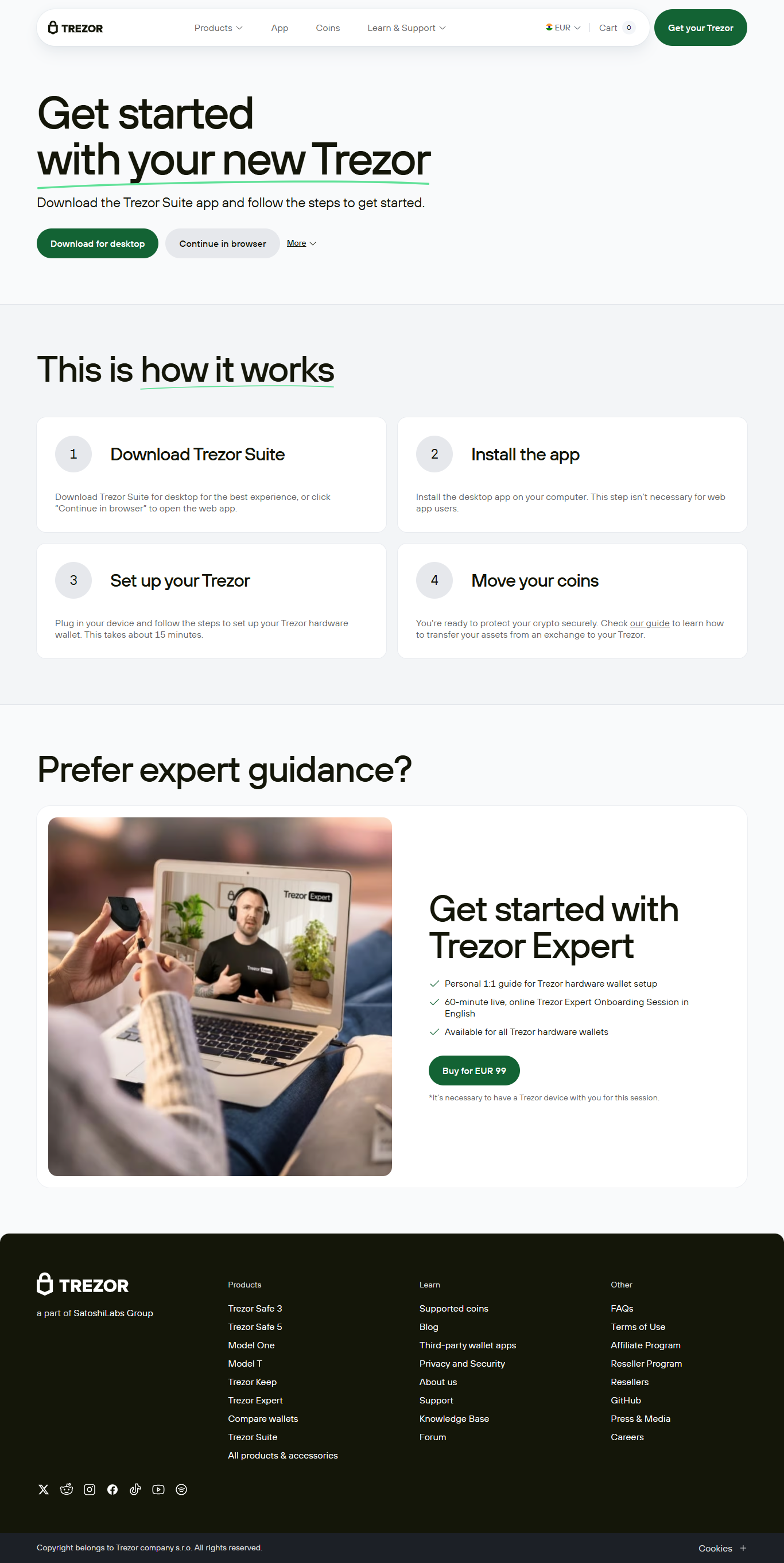
Introduction to Trezor.io/start
Trezor.io/start is the official portal to begin using your Trezor hardware wallet. Trezor is a pioneer in cryptocurrency security, providing a secure method to store digital assets offline. By using Trezor, you gain complete control over your cryptocurrencies while ensuring your private keys remain protected from hackers, malware, and phishing attacks.
This comprehensive guide will walk you through every step of setting up, securing, and managing your Trezor wallet, as well as offer best practices to keep your funds safe and accessible.
Why Choose Trezor?
Security is paramount when it comes to cryptocurrencies, and Trezor offers unmatched advantages:
- Cold Storage: Keeps your private keys offline, safe from internet attacks.
- Multi-Currency Support: Compatible with over 1,600 cryptocurrencies including Bitcoin, Ethereum, and many altcoins.
- User-Friendly Interface: Accessible via Trezor Suite or web interfaces for easy management.
- Open Source: Firmware is transparent and can be audited by the community for added security.
- Backup & Recovery: Provides a reliable way to restore access if your device is lost or damaged.
Unboxing Your Trezor Device
Upon receiving your Trezor, inspect the packaging to ensure it hasn’t been tampered with. The typical contents include:
- The Trezor hardware wallet.
- USB cable for connecting the device to a computer.
- Recovery seed cards for backup.
- Quick-start guide and instruction manual.
Always verify the device integrity before use. If the packaging appears compromised, contact Trezor support immediately.
Step 1: Connecting to Trezor.io/start
Visit Trezor.io/start to initiate your setup. Follow these steps:
- Connect your Trezor device to your computer using the USB cable.
- Select your device model on the website.
- Install Trezor Bridge if prompted, which enables secure communication between your device and computer.
- Follow the on-screen instructions to start the setup process.
Step 2: Initializing Your Wallet
Wallet initialization involves creating a new wallet and generating your recovery seed. The recovery seed is critical for recovering your funds in case your device is lost or damaged.
- Select “Create a new wallet” during setup.
- Write down your recovery seed on the provided card and keep it secure.
- Verify the seed on your device as prompted.
- Never store your seed digitally or online to prevent theft.
Step 3: Setting a Secure PIN
Setting a PIN adds an essential layer of security. You will need this PIN every time you access your wallet.
- Choose a strong, unique PIN.
- Enter the PIN directly on the device screen to avoid keyloggers.
- Memorize your PIN or store it securely offline.
Step 4: Installing Trezor Suite
Trezor Suite is the official software for managing your wallet and cryptocurrency portfolio. Features include monitoring balances, sending/receiving funds, and managing multiple accounts.
- Download Trezor Suite from the official Trezor website.
- Install it on your desktop or use the web-based interface.
- Connect your Trezor device and log in securely.
- Use the dashboard to monitor balances, transaction history, and manage multiple accounts.
Step 5: Adding Cryptocurrencies
Adding new cryptocurrencies to your Trezor wallet is straightforward:
- Open Trezor Suite and select “Add Account.”
- Choose the cryptocurrency you wish to add.
- Generate a secure wallet address for receiving funds.
- Use this address for deposits from exchanges or other wallets.
Step 6: Sending and Receiving Funds
Transferring cryptocurrencies using Trezor is safe and secure. Steps include:
- Click “Send” or “Receive” in Trezor Suite.
- Enter the recipient address and the amount.
- Confirm the transaction on your Trezor device.
- Transactions are validated on the blockchain for full security.
Step 7: Advanced Security Features
Trezor devices come with multiple security layers to protect your assets:
- Passphrase Protection: Adds an extra layer of security beyond the PIN.
- Encrypted Communication: Ensures safe interactions between your device and computer.
- Firmware Transparency: Open-source firmware allows for independent auditing.
- Physical Tamper Protection: Devices are built to resist tampering.
Step 8: Wallet Recovery and Backup
Your recovery seed allows you to restore your wallet in case of device loss, damage, or theft.
- Obtain a new Trezor device or compatible wallet.
- Select “Recover Wallet” during setup.
- Carefully enter your recovery seed.
- Set a new PIN and regain access to your funds.
Best Practices for Trezor Users
Follow these tips to maintain maximum security:
- Always use the official website: Trezor.io/start
- Never share your PIN or recovery seed with anyone.
- Regularly update Trezor firmware.
- Store recovery seed backups securely offline.
- Be vigilant against phishing attacks and fake websites claiming to be Trezor.
Frequently Asked Questions
Q: Can I use Trezor offline?
A: Yes, Trezor provides cold storage. Transactions can be signed offline, which maximizes security.
Q: How do I verify that my Trezor device is genuine?
A: Purchase only from official Trezor distributors, inspect packaging, and verify firmware integrity.
Q: What happens if I lose my recovery seed?
A: Losing your recovery seed means losing access to your wallet permanently. Always keep it secure offline.
Q: Is Trezor compatible with mobile devices?
A: Yes, Trezor supports mobile access through compatible apps and web interfaces, but full functionality is best accessed via desktop Trezor Suite.
Conclusion
Trezor.io/start is the official portal to begin your journey with Trezor hardware wallets. By following this guide, you can safely initialize your wallet, secure your funds, manage multiple cryptocurrencies, and maintain peace of mind knowing your assets are protected.
Trezor combines cutting-edge security, ease of use, and advanced functionality, making it a perfect choice for both beginners and experienced cryptocurrency holders. Start your Trezor experience today at Trezor.io/start and gain full control over your digital assets while ensuring maximum security.